
Creating a Private Outdoor Retreat in the Sonoran Desert
Privacy can be difficult to achieve in Phoenix backyards, particularly when neighboring homes have elevated patios, second-story windows, or minimal separation between properties. Homeowners want comfortable outdoor spaces without sacrificing attractive views, natural sunlight, or the distinctive beauty of the Sonoran Desert.
A professional landscape designer in Phoenix can help address these challenges through thoughtful landscape design, strategically placed native plants, decorative hardscaping, and efficient irrigation designs. The best solutions combine natural and structural screening while accounting for Arizona’s intense heat, dry conditions, and unique plant requirements.
Whether the goal is to shield a swimming pool, create a secluded patio, or reduce visibility from neighboring properties, successful privacy landscaping begins with understanding how different landscape features work together.
Use Native Plants to Create Natural Privacy Screens
Plants are among the most attractive ways to introduce privacy into desert landscapes. However, selecting the right vegetation requires balancing screening density, mature plant size, irrigation needs, and long-term maintenance. In Phoenix and throughout Maricopa County, desert-adapted plants can create natural barriers while complementing the surrounding environment.
Plant Palo Verde and Other Desert Trees
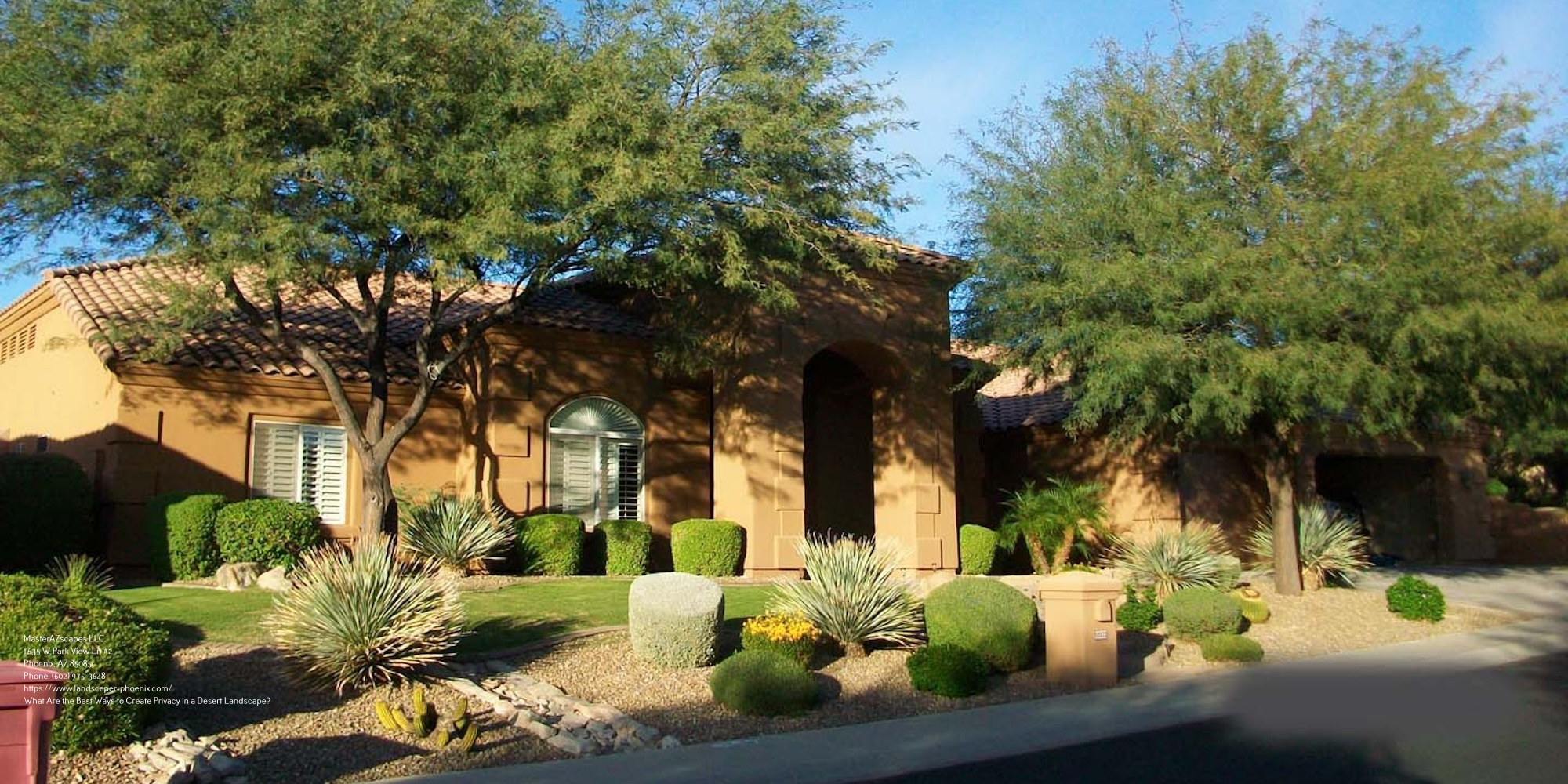
The palo verde is a recognizable feature of Arizona’s natural landscape. Known for its green bark, airy canopy, and seasonal yellow flowers, this desert-adapted tree can provide filtered screening around patios and gathering spaces.
Although palo verde trees do not create completely opaque barriers, their branching structure can help interrupt sightlines from neighboring windows. Their appearance also complements decomposed granite, natural stone, and other materials commonly used in desert landscaping. Other suitable trees may include mesquite and appropriately selected desert-adapted species.
Tree placement should account for mature height, canopy spread, root development, and proximity to pools, foundations, and underground utilities. A properly positioned tree can create useful screening without requiring a continuous row of tall vegetation.
Establish Privacy With Dense Desert Shrubs
Where homeowners need greater visual separation at eye level, shrubs can provide more consistent screening than trees with elevated canopies. Hopseed bush and other appropriate screening shrubs can be incorporated into residential planting designs. Species selection should reflect local growing conditions, desired mature height, available planting space, and sunlight exposure.
Spacing also affects long-term performance. Plants installed too closely may compete for water and require frequent pruning, while excessive spacing can leave unwanted gaps. A coordinated planting plan establishes a balanced arrangement that supports privacy as vegetation matures.
Do You Want Expert Landscape Design Services?
Contact MasterAZscapes today and transform your outdoor space.
Combine Privacy Walls With Desert-Friendly Hardscapes
Natural screening takes time to develop. For homeowners seeking immediate results, masonry walls and decorative barriers can provide dependable separation from neighboring properties. Well-designed hardscapes also help establish boundaries between different outdoor living areas.
Incorporate Masonry Privacy Walls
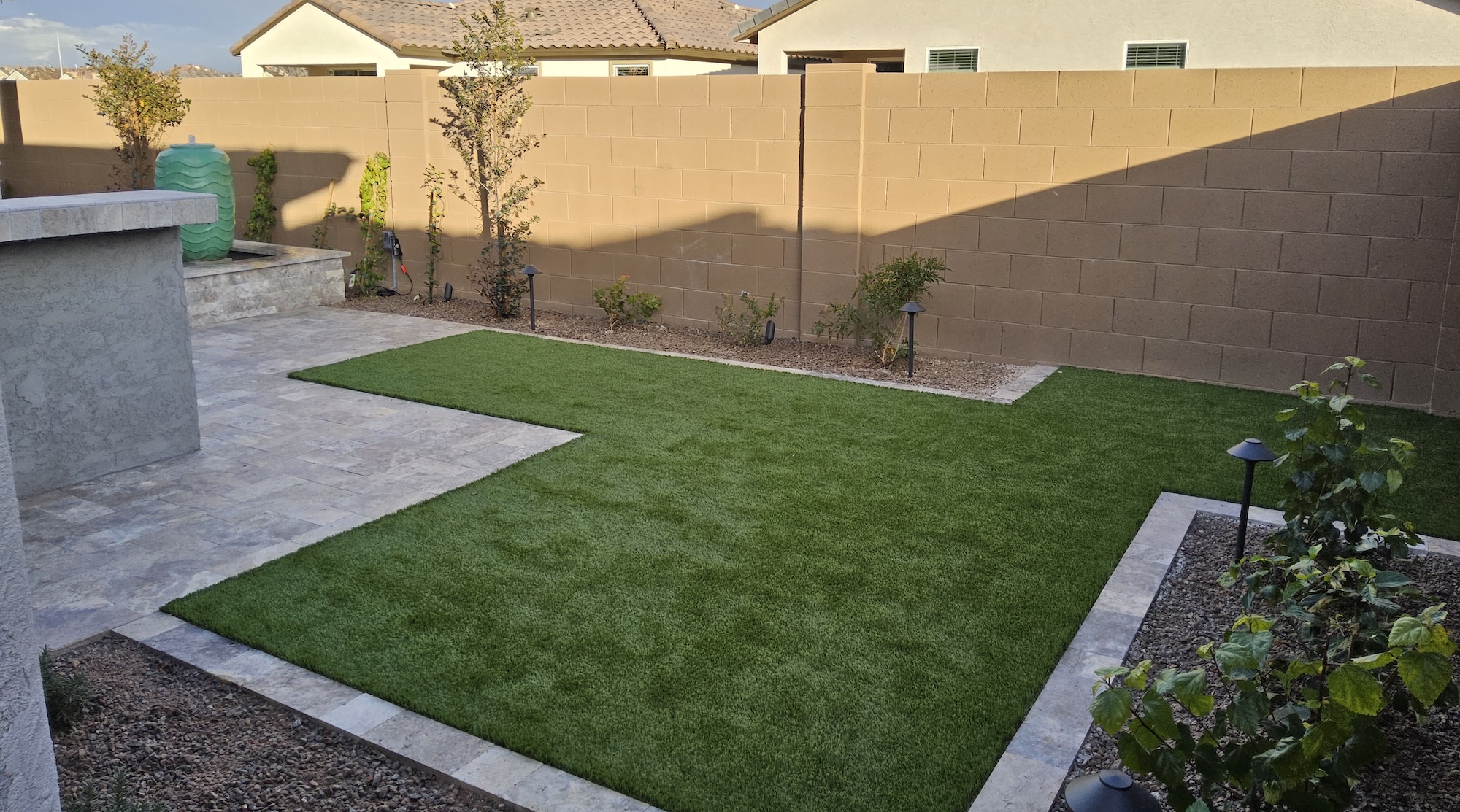
Masonry privacy walls can shield patios, swimming pools, and outdoor dining spaces from direct views. Concrete block, stone finishes, and textured masonry surfaces can be selected to complement the home’s exterior architecture. Earth-toned materials often work particularly well in landscapes inspired by the Sonoran Desert.
Privacy walls can also be integrated with paver installation, retaining walls, and adjacent planting beds to create a cohesive environment. For properties with existing elevation changes, retaining walls may serve an additional landscape function. However, retaining structures require appropriate engineering considerations, particularly when supporting significant soil loads.
Consider Local Landscape and Development Requirements
Structural improvements may be subject to applicable municipal ordinances, zoning provisions, and property-specific restrictions. The Phoenix Planning and Development Department administers regulations relevant to many residential construction projects. Depending on the proposed structure, homeowners may need to evaluate wall height limitations, setbacks, and permit requirements.
Certain properties may also be affected by HOA rules, subdivision requirements, or applicable overlay standards. The city’s Landscape Ordinance and other landscape standards may be relevant in specific development contexts, but requirements vary by project and property type. They should not be assumed to apply identically to every existing residential backyard. Reviewing applicable requirements before installation can help avoid unnecessary design changes.
Create Private Patios Through Strategic Landscape Design
Privacy does not always require enclosing an entire property. Often, adjusting the arrangement of outdoor living features can reduce unwanted visibility while preserving the sense of openness. An effective landscape design considers where people spend time, which neighboring areas overlook the yard, and how different features influence sightlines.
Position Outdoor Living Areas Intentionally
A patio located directly opposite a neighboring window may feel exposed even when the property includes perimeter walls. Relocating seating areas, changing furniture orientation, or incorporating screening near frequently used spaces can improve privacy without extensive construction. Outdoor kitchen layouts can also contribute to separation. Cooking counters, masonry features, and adjacent planting beds may help define entertainment areas while blocking selected views. For smaller yards, these targeted improvements can create functional outdoor retreats without making the property feel crowded.
Use Elevation and Retaining Walls Carefully
Properties with sloping terrain require additional planning because elevation can significantly affect privacy. A neighboring patio positioned above a backyard may overlook traditional perimeter fencing. In these situations, additional planting height or carefully located structural screening may be necessary.
Changes involving retaining walls, site grading, or substantial hardscape construction can also affect drainage design. Water should be directed away from buildings and managed according to site conditions. Any proposed grading changes should account for existing drainage patterns and neighboring properties. Although civil engineers may become involved when structural or drainage complexity warrants professional engineering, routine residential landscape projects do not automatically require a civil engineering team.
Incorporate Shade Structures for Overhead Privacy
Second-story windows and elevated neighboring properties can create privacy concerns that ordinary fencing cannot resolve. Pergolas and other shade structures can help establish more secluded gathering spaces while reducing direct sun exposure.
Create Defined Outdoor Rooms
A pergola positioned over a patio creates a visual boundary between the gathering area and the surrounding landscape. Depending on its configuration, the structure may provide opportunities for partial overhead screening or compatible side panels. The amount of privacy depends on the spacing, orientation, and placement of individual components. An open-roof pergola, for example, may provide limited protection from views originating above the structure.
Select Materials Appropriate for Phoenix Heat
Phoenix’s intense summer temperatures create additional considerations for outdoor structures. Shade elements should be designed with attention to sun exposure, durability, ventilation, and maintenance requirements. Materials that perform adequately in milder climates may behave differently under prolonged desert sun exposure. Shade structures can also be coordinated with landscape lighting, nearby planting, and hardscape materials to make outdoor gathering areas more inviting throughout the day and evening.
Develop Water-Efficient Irrigation Designs for Privacy Landscaping
Growing living privacy screens in an arid climate requires careful water management. Although desert-adapted vegetation can be suitable for low-water landscapes, newly installed trees and shrubs still require adequate irrigation while establishing their root systems. Thoughtful irrigation designs can support healthy plant growth without unnecessarily increasing overall landscape water consumption.
Group Plants According to Irrigation Demand
A well-planned irrigation system recognizes that different plants have different water requirements. Trees, shrubs, and ornamental plants should be grouped according to compatible irrigation demand, soil conditions, and sunlight exposure whenever practical. Drip irrigation is commonly used in desert planting beds because it applies water near the root zone. However, proper emitter placement, watering duration, and system maintenance remain essential. Drip irrigation alone does not guarantee efficient water use.
Consider Water Budget Calculations
For larger or more complex landscape projects, water budget calculations can help estimate landscape irrigation requirements and compare proposed planting arrangements. These calculations may consider planted area, vegetation characteristics, irrigation efficiency, and climate conditions. Although formal water budgets are more commonly associated with certain regulated or commercial projects, the underlying principles can help homeowners make informed choices about plant selection and irrigation.
Properties within the Phoenix AMA (Phoenix Active Management Area) operate within a broader regional water-management framework. However, residential landscaping requirements should not be confused with rules governing groundwater rights or regulated development activities. Homeowners should verify any applicable municipal water conservation ordinances before undertaking projects that may be subject to specific restrictions.
Integrate Water Harvesting Where Appropriate
Landscape designs can sometimes incorporate passive rainwater harvesting strategies, such as shallow planted basins that capture runoff from suitable surfaces. Proper water harvesting basin siting considers drainage patterns, soil infiltration, nearby structures, and plant needs.
Larger developments may require formal, site-specific Water Harvesting Plans, but these requirements should not automatically be applied to ordinary residential privacy landscaping. For residential properties, properly designed drainage and water harvesting features can contribute to landscape functionality when site conditions allow.
Preserve Existing Desert Vegetation When Possible
Removing existing vegetation is not always necessary to achieve backyard privacy. Mature desert trees and established shrubs may already provide useful screening, shade, and visual character. A landscape assessment should identify vegetation worth preserving before new walls, patios, or planting beds are introduced.
Evaluate Existing Native Plants
A Native Plant Inventory documents the types and locations of native vegetation on a property. Formal Native Plant Inventories and Salvage Plans may be required for certain development activities under applicable local regulations. For smaller residential projects, a basic assessment of existing vegetation can still provide valuable planning information.
Some native plants are protected under Arizona law, and removal or relocation may involve specific requirements. Homeowners should verify applicable rules before disturbing protected vegetation.
Create Plant Preservation Areas
Where existing vegetation is worth retaining, designating a native plant preservation zone can help protect it during landscape improvements. Construction activity, soil compaction, and changes in surrounding grade can damage established root systems.
Planning hardscape layouts around important trees may preserve natural privacy while reducing the need for replacement planting. This approach also helps maintain the established character of a desert property.
Layer Landscaping Elements for Better Screening
One of the most effective ways to create privacy is to combine multiple screening elements at different heights. Instead of surrounding the entire yard with a single solid barrier, homeowners can develop a layered design that feels more natural.
For example, a backyard privacy arrangement might include:
- A masonry wall: Provides immediate separation along the property boundary.
- Desert-adapted shrubs: Softens the wall and adds eye-level screening.
- Palo verde or mesquite trees: Interrupts elevated sightlines and introduces overhead shade.
- Decorative pavers and decomposed granite: Connects planting areas with patios and walkways.
- Landscape lighting: Highlights selected features and improves nighttime visibility.
A consistent plant palette can create continuity throughout the yard. This principle of consistent plant palette management is especially useful when multiple planting areas need to look like parts of a unified design. Spacing, mature plant dimensions, and ongoing irrigation requirements should guide the arrangement. The finished environment should offer meaningful privacy without sacrificing circulation, views, or the natural beauty of the landscape.
Plan a Private Desert Landscape With MasterAZscapes
Privacy landscaping in Phoenix is most successful when natural screening, structural features, drainage, and irrigation work together. Homeowners should begin by identifying their primary privacy concerns, evaluating existing vegetation, and considering how different landscape improvements will affect the property’s long-term usability.
MasterAZscapes LLC specializes in customized landscape design and outdoor living improvements suited to Arizona properties. The company’s integrated design-build approach allows homeowners to coordinate planting, hardscaping, irrigation, and related landscape features within a cohesive project.
Homeowners interested in creating a more secluded backyard can contact MasterAZscapes at (602) 975-3648 to request a free estimate and explore privacy solutions appropriate for their property.
Do You Want Expert Landscape Design Services?
Contact MasterAZscapes today and transform your outdoor space.