Why Great Outdoor Spaces Feel Open, Private, and Inviting All At Once
Some outdoor spaces don’t feel right. They’re either too exposed, too cramped, or visually flat. That uneasy feeling often comes down to one thing: poor spatial layering. A skilled landscape designer in Phoenix understands how to organize outdoor spaces so they feel private without being closed off, accessible without feeling empty, and visually rich without clutter.
MasterAZscapes approaches every landscape design as a balance of movement, structure, and depth. Whether it’s outdoor kitchens, fire pits, retaining walls, or water features, each element is placed with intention.
A landscape designer uses spatial layering techniques, like plant grouping, elevation changes, hardscape placement, and visual framing, to balance privacy, access, and depth. These strategies create outdoor spaces that feel functional, comfortable, and visually engaging while improving flow and long-term usability.
Why Some Yards Feel Instantly Comfortable While Others Don’t
Walk into a well-designed yard, and you’ll notice something subtle. It feels natural. Not random, not forced, just right. That feeling comes from layering.
Spatial layering is the process of arranging elements; plants, structures, pathways, and open areas, into zones that guide movement and shape perception. It’s a core principle in landscape architecture and something often overlooked in DIY projects.
People often ask: “How do designers make a small yard feel bigger and more private at the same time?”
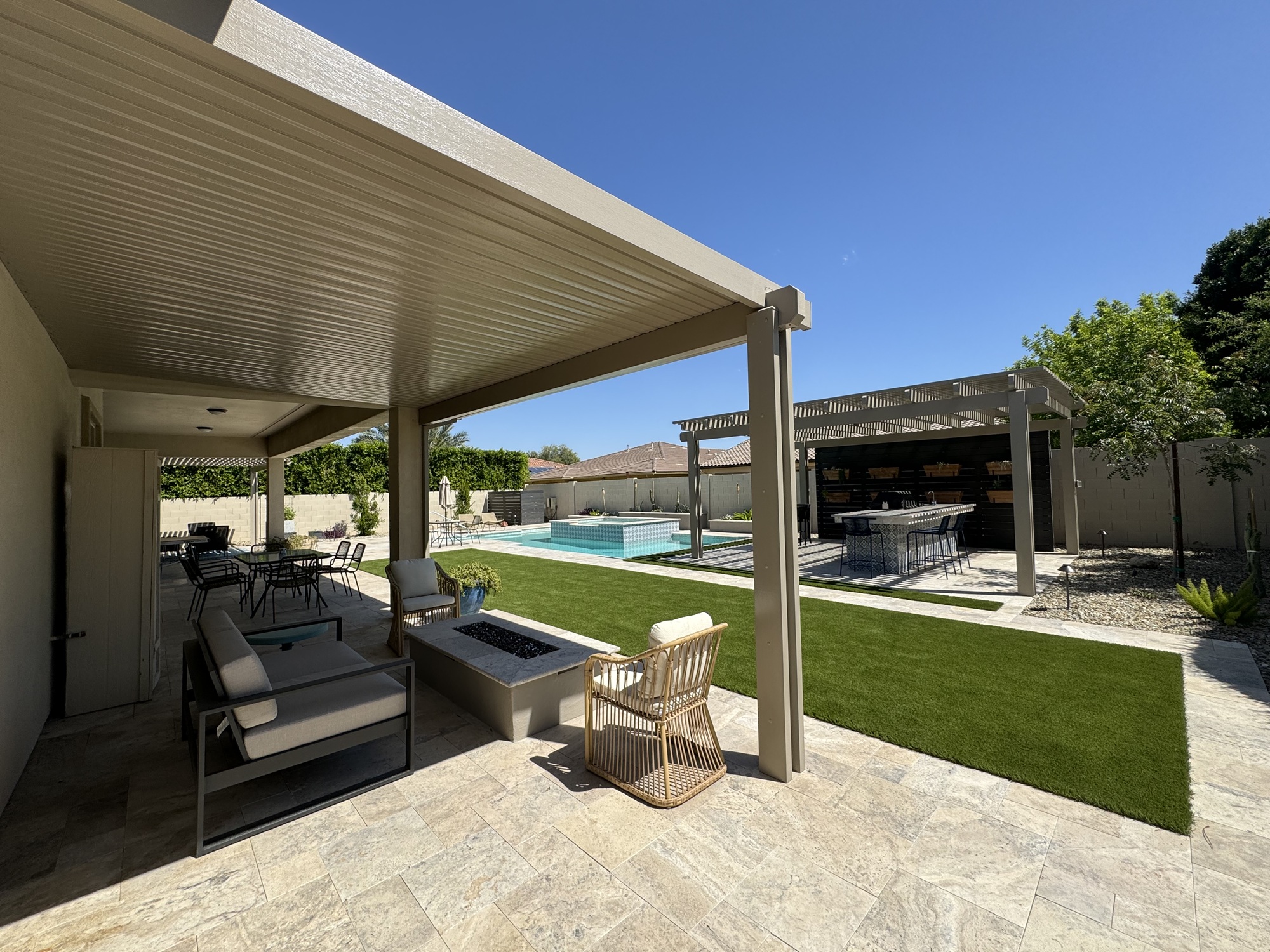
The answer lies in how layers are built. Foreground elements, such as low plantings or curbing borders, set the stage. Midground features, such as paver patios or outdoor living spaces, create usable zones. Background elements; trees, shade structures, or retaining walls; define boundaries and privacy.
In the Phoenix Metropolitan Area, this becomes even more critical. The desert southwest offers wide-open views, intense sunlight, and minimal natural screening. Without intentional layering, outdoor spaces can feel exposed and unfinished.
MasterAZscapes uses desert-specific design principles, combining native plants, hardscape services, and irrigation systems to build environments that feel structured yet open.
The Hidden Mistakes that Flatten Outdoor Spaces and Kill Privacy
Many homeowners unintentionally remove depth from their outdoor space without realizing it. The result? A yard that feels flat, exposed, and underwhelming.
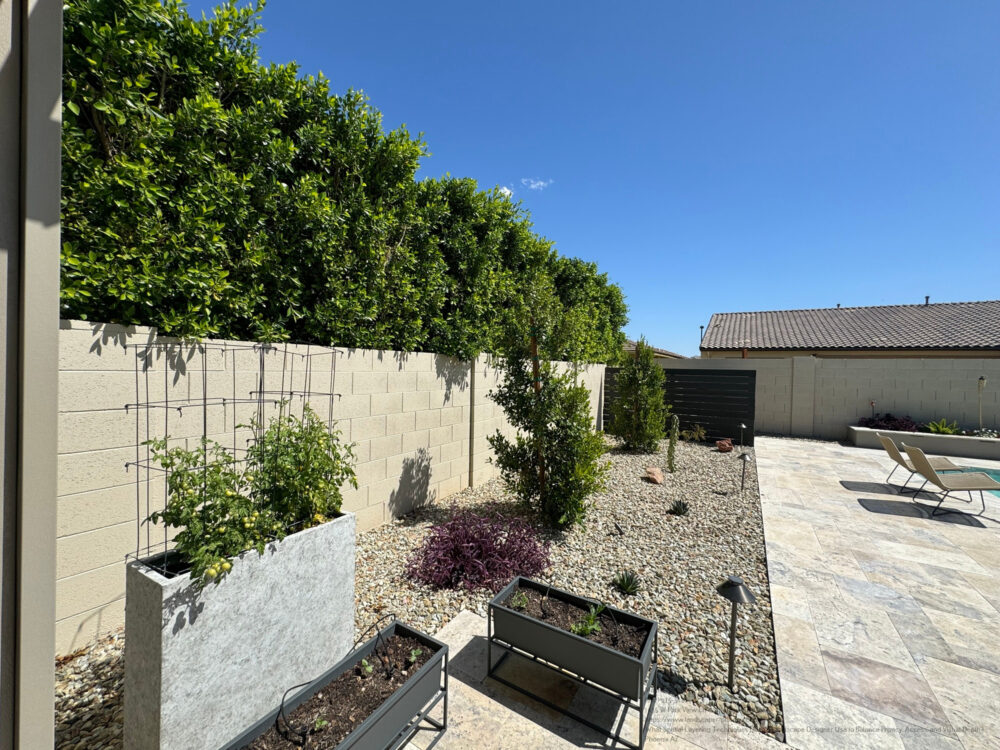
- One common mistake is placing everything along the perimeter. While it seems logical, it eliminates mid-layer depth and leaves the center feeling empty. Another issue is the overuse of uniform plant sizes. Without variation, the eye has nowhere to travel.
- Improper hardscape integration is another frequent problem. Large concrete pavers or patios installed without transition zones can make spaces feel disconnected rather than cohesive.
- There’s also the issue of ignoring vertical layering. Without elements like shade structures, pergolas, or trees, outdoor spaces lack dimension.
- According to guidance from the Arizona Department of Water Resources, thoughtful landscape planning that integrates plant placement and water-efficient irrigation systems significantly improves usability and sustainability, especially in desert climates.
MasterAZscapes helps homeowners avoid these issues by designing with intention. Their design process includes evaluating sightlines, access points, and how each feature contributes to privacy and flow.
Do You Want Expert Landscape Design Services?
Contact MasterAZscapes today and transform your outdoor space.
How Smart Layering Transforms Everyday Backyards into Functional Living Spaces
When spatial layering is done right, everything changes. A basic yard becomes a true backyard oasis.
Privacy improves without walls. Instead of blocking views completely, designers use layered planting; native grasses, shrubs, and trees, to create soft visual barriers. This allows airflow and light while still offering seclusion.
Access becomes intuitive. Walkways, stepping stones, and paver patio layouts guide movement naturally. You don’t have to think about where to walk; it just makes sense.
Visual depth creates interest. By combining elements like artificial turf, natural stone, and water features, designers create contrast and rhythm. Your eye moves through the space, discovering something new at every angle.
MasterAZscapes often incorporates outdoor entertainment areas, fire features, and custom pools into layered designs. One client project in Maricopa County transformed a flat yard into multiple zones, lounging, dining, and play, without making the space feel crowded.
That’s the power of layering. It doesn’t just improve how a space looks, it changes how it feels and functions.
The Layering Techniques that Make Spaces Feel Designed, Not Random
A professional approach to layering isn’t guesswork. It’s a structured method built on experience and environmental understanding. A landscape designer in Phoenix uses several key techniques to balance privacy, access, and depth.
One of the most effective strategies is staggered plant placement. Instead of lining plants up, designers offset them in layers to create depth and soften boundaries.
Elevation changes also play a major role. Retaining walls, raised planters, and subtle grading shifts add dimension while improving drainage in caliche soils common in Arizona landscapes.
Framing is another technique. Designers use trees, pergolas, or shade structures to “frame” views, guiding attention to focal points such as water features or fireplaces & fire pits.
Finally, transitions matter. Moving from one zone to another; say, from artificial turf to a concrete travertine patio, should feel seamless. This is achieved through material blending and thoughtful spacing.
These methods are part of a broader landscape architecture design approach that MasterAZscapes applies to every project.
5 Proven Ways Designers Build Depth Without Making Spaces Feel Crowded
Designing for depth doesn’t mean filling every inch of space. In fact, restraint is often what makes layering work.
Here are five techniques professionals rely on:
- Use three visual layers – foreground, midground, and background elements
- Mix textures and materials – combine synthetic lawns, natural stone, and plant palettes
- Create focal points – fire pits, water features, or outdoor kitchens- that anchor the design
- Incorporate vertical elements – shade structures and trees add height
- Design for movement – pathways and open zones keep the space functional
In the Sonoran Desert, these strategies must also align with water-efficient irrigation systems and plant selection suited to the climate. That’s why design consultation and site planning are essential before any installation services begin.
What Experienced Designers Notice Immediately that Most Homeowners Miss
A trained eye sees things differently. Where a homeowner might see space, a designer sees opportunity.
They notice how sunlight moves across the yard throughout the day. They understand how wind patterns affect comfort. They evaluate how outdoor living spaces connect to the home’s interior.
MasterAZscapes often identifies issues early in the PRE-CON phase, saving clients time and money later. For example, shifting a paver patio by just a few feet can improve shade coverage and reduce heat buildup.
They also think long-term. How will plants grow? Will shade structures still provide coverage in five years? Will irrigation systems support future expansion?
This level of foresight is what separates professional landscape design from trial-and-error DIY approaches.
The Key Principles that Turn Good Designs into Exceptional Outdoor Environments
At its core, spatial layering is about balance. Too much structure, and the space feels rigid. Too little, and it feels chaotic.
The best designs achieve harmony between openness and enclosure, movement and stillness, simplicity and detail. They integrate outdoor living elements like outdoor kitchens, misting systems, and landscape lighting without overwhelming the space.
They also respect the natural environment. In Phoenix, that means working with drought-tolerant plants, water harvesting plans, and efficient irrigation design.
For homeowners, the takeaway is simple: layering isn’t decoration, it’s strategy. It determines how a space functions, feels, and evolves.
A well-layered design increases curb appeal, supports property value, and creates a space people actually want to use.
Why MasterAZscapes is The Smart Choice for Thoughtful, Layered Landscape Design
We at MasterAZscapes provide our customers with the best solutions by designing outdoor spaces that balance privacy, access, and visual depth through proven layering techniques. Our team blends landscape architecture, hardscape integration, and desert-specific design principles to create environments that feel natural, functional, and long-lasting.
We proudly showcase our excellent services through custom landscape installation, outdoor living spaces, fire features, and water features that transform everyday yards into purposeful environments. From design consultation to full construction services, our build team ensures every detail is intentional.
Contact MasterAZscapes today for expert landscape design and transform your property into a cohesive, high-value outdoor environment. Experience the difference that thoughtful planning and expert execution bring with a trusted landscape designer in Phoenix.
Do You Want Expert Landscape Design Services?
Contact MasterAZscapes today and transform your outdoor space.