
Custom Tree Lighting Installation for Beautiful Outdoor Landscapes
Trees add natural beauty, shade, and character to a property, and professional lighting can highlight those features long after sunset. MasterAZScapes provides tree lighting installation services for homeowners and commercial property owners who want to enhance their outdoor spaces with attractive, carefully positioned illumination. From subtle uplighting to decorative permanent tree lighting, our team helps develop solutions that complement existing landscaping.
Proper tree lighting requires more than placing fixtures beneath branches. Light positioning, electrical safety, tree growth, and suitable mounting methods all influence the finished installation. Professional planning helps create inviting outdoor environments while respecting the health of the trees being illuminated.
Let’s Bring Your Landscaping Ideas to Life!
Have a project in mind? From beautiful patios to custom outdoor living spaces, our team is ready to help you explore the possibilities. Tell us about your project using the form below, and let’s get started!
"*" indicates required fields
Professional Tree Lighting Design and Installation Expertise
A successful tree lighting project begins with evaluating the tree’s size, structure, location, and surrounding landscape.
MasterAZScapes considers how light will interact with the trunk, branches, foliage, and nearby architectural features.
Selecting Appropriate Lighting Techniques
Different trees benefit from different lighting arrangements.
Uplighting emphasizes trunk texture and canopy structure, while downlighting can create softer illumination across patios, pathways, and planting beds.
Important installation considerations include:
- Tree Health: Avoiding attachments that restrict growth or damage living tissue.
- Fixture Placement: Positioning lights to create attractive effects without excessive glare.
- Electrical Safety: Selecting approved outdoor equipment and suitable connections.
- Light Intensity: Using brightness and beam angles appropriate for the tree.
- Maintenance Access: Allowing room for future adjustments, pruning, and inspections.
- Landscape Integration: Coordinating illumination with surrounding vegetation and hardscaping.
These details help establish lighting that remains practical as the landscape changes.
Custom Tree Lighting Installation Options
Tree Uplighting and Trunk Accent Lighting
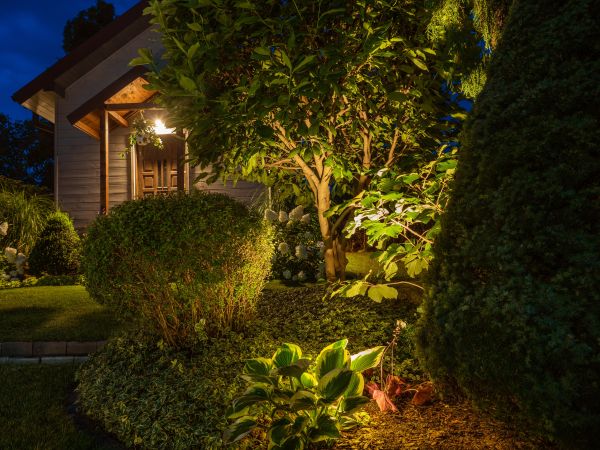
Uplighting uses ground-mounted fixtures to illuminate trees from below.
Carefully positioned lights can emphasize branching patterns, textured bark, and architectural shapes.
Low-voltage LED fixtures offer flexible illumination options when properly selected and installed.
Professional placement helps prevent harsh shadows and unnecessary light spill.
Tree Downlighting and Moonlighting Effects
Downlighting creates gentle illumination from elevated positions.
When appropriate for the tree and installation conditions, fixtures can direct light toward nearby walkways, patios, and garden areas.
This technique can create a natural moonlighting effect while maintaining comfortable visibility.
Mounting methods should accommodate tree growth and avoid unnecessary injury.
Permanent Tree Lighting Installation
Permanent tree lighting provides year-round decorative illumination without requiring repeated seasonal installations.
Depending on the design, compatible LED fixtures may be incorporated around tree canopies or nearby landscape structures.
Permanent installations require particular attention to growing branches, cable movement, weather exposure, and maintenance accessibility.
Decorative Socket Lights and Tree Canopy Lighting
Decorative socket light arrangements can create a welcoming atmosphere around outdoor seating areas.
Outdoor-rated socket-and-string lighting systems may be positioned near trees or supported by suitable independent structures.
Fixtures, cables, and supporting hardware must be approved for the intended installation. Electrical cords should never be tightly wrapped around growing trunks or branches.
Our Professional Tree Lighting Installation Process
A coordinated installation generally involves:
- Site Consultation: Reviewing tree conditions and desired lighting effects.
- Lighting Design: Selecting fixture types, placement, and brightness.
- Equipment Planning: Identifying compatible transformers, wiring, and controls.
- Fixture Installation: Positioning equipment using appropriate mounting methods.
- System Testing: Checking illumination, connections, and controls.
- Final Adjustments: Refining fixture angles and minimizing unwanted glare.
Professional installers must also account for future tree growth and changing landscape conditions.
Why Choose MasterAZScapes for Tree Lighting Installation?
Established in 2008, MasterAZScapes is a locally owned landscaping company with 40 years of industry experience.
Our approach combines practical landscaping knowledge with tree care considerations, helping customers select lighting arrangements that complement existing vegetation.
Our qualifications and customer-focused practices include:
- Arizona Registrar of Contractors licensing
- BBB accreditation
- Certified arborist expertise
- Free project estimates
- Experience working with homeowner associations
- Material and workmanship warranties, subject to applicable terms
We emphasize thoughtful design, clear communication, and coordination with appropriately licensed electrical professionals when required.
Customer Reviews and Tree Lighting Experiences
Here’s what customers are saying about working with MasterAZScapes.


Illuminate Your Landscape with MasterAZScapes
Thoughtfully installed tree lighting can transform your property’s nighttime appearance while highlighting its natural features.
Contact MasterAZScapes today to request a free tree lighting installation estimate. Explore customized illumination options that complement your trees, landscaping, and outdoor living spaces.
Frequently Asked Questions About Tree Lighting Installation
The cost of professional tree lighting installation depends on the number of trees being illuminated, their size, the selected fixtures, and the complexity of the electrical installation.
A single tree illuminated with a few ground-mounted LED fixtures may require fewer materials and less installation work than a large property featuring multiple trees, elevated downlights, and permanent decorative lighting.
Tree height and accessibility can also influence pricing. Installing equipment around mature trees may require additional planning, specialized access equipment, or alternative mounting methods.
Other expenses may include transformers, underground wiring, weather-resistant connections, automated controls, and necessary electrical work.
For properties in Arizona, fixtures should be selected with consideration for prolonged sunlight, high temperatures, dust, and seasonal storms.
Homeowners should request an estimate that explains fixture selection, electrical components, installation methods, and applicable warranty coverage.
MasterAZScapes offers free estimates to help customers explore tree lighting options and understand the anticipated project scope.
Permanent tree lighting can damage trees if fixtures, wires, or mounting hardware are installed incorrectly or left unadjusted as the tree grows.
One common concern is tightly wrapped cable or lighting strands around trunks and branches.
As a tree increases in diameter, restrictive materials can interfere with normal growth and potentially damage the bark or underlying living tissues.
Improperly placed fasteners may also create wounds or interfere with the tree’s structural development.
For this reason, professional tree lighting design should consider the species, growth rate, branching structure, and expected maintenance needs.
Ground-mounted uplighting may be preferable when homeowners want to avoid attaching equipment directly to living trees.
Where elevated fixtures are appropriate, mounting systems should be selected and maintained with tree health in mind.
Permanent installations should be inspected periodically to ensure cables and fixtures remain secure without restricting growth.
MasterAZScapes can consider tree health and long-term maintenance requirements when developing lighting arrangements.
Tree uplighting and downlighting are two lighting techniques used to create different visual effects within a landscape.
Uplighting involves positioning fixtures near ground level and directing light upward toward the trunk, branches, or canopy.
This approach can emphasize bark texture, branching patterns, and the overall shape of a tree.
It is commonly used when homeowners want trees to become prominent nighttime landscape features.
Downlighting involves positioning fixtures at elevated locations and directing illumination toward the ground.
When appropriately installed, downlights can create softer lighting across pathways, patios, and planting beds.
This technique is sometimes called moonlighting because it can resemble natural illumination filtering through branches.
The appropriate method depends on tree structure, available mounting locations, surrounding features, and desired lighting effects.
Some properties benefit from combining both techniques.
For Arizona landscapes with mature shade trees, fixture positioning should also account for seasonal canopy changes and regular pruning.
MasterAZScapes can help homeowners compare lighting approaches based on their landscape design goals.
Low-voltage LED lighting can be an effective option for permanent tree illumination because it offers energy-efficient operation and flexible fixture placement.
Many landscape lighting systems use compatible transformers to supply reduced voltage to outdoor fixtures.
LED products are available in different beam angles, brightness levels, and color temperatures, allowing lighting arrangements to be adjusted for different tree sizes and architectural styles.
However, low-voltage equipment still requires appropriate installation methods.
Transformers must be sized correctly, wiring must be suitable for the outdoor environment, and connections should be protected against moisture and physical damage.
When fixtures are attached to trees, installers must also consider movement, growth, and future pruning.
Permanent lighting systems may incorporate timers or photo sensors to simplify operation.
For homeowners comparing products, fixture durability, replacement availability, and maintenance requirements are important considerations.
MasterAZScapes can help evaluate suitable lighting arrangements while coordinating regulated electrical work with appropriately licensed professionals when necessary.
Maintaining tree lighting involves inspecting fixtures, wiring, mounting methods, and illumination patterns as trees mature.
Tree growth can gradually change the effectiveness of a lighting arrangement.
Branches may extend into the path of a fixture, foliage can block previously visible features, and mounting hardware may require adjustment.
Permanent lighting attached to trees needs particular attention because restrictive cables or fasteners can create problems as trunks and branches increase in size.
Routine maintenance should include checking for damaged wiring, loose fixtures, moisture intrusion, and changes in light direction.
Ground-mounted fixtures should also be inspected after landscaping work or significant soil movement.
For Arizona properties, summer heat, dust, monsoon winds, and seasonal pruning can influence maintenance needs.
Tree lighting should be coordinated with appropriate tree care rather than interfering with necessary pruning or inspections.
Damaged electrical equipment should be repaired or replaced by appropriately qualified professionals.
MasterAZScapes can help property owners consider future tree growth and maintenance accessibility when planning permanent lighting installations.