
Custom Paver Installation for Beautiful and Functional Outdoor Spaces
Professionally installed pavers can transform an ordinary outdoor area into an attractive, durable space designed for everyday use. MasterAZScapes provides paver installation services for homeowners and commercial property owners looking to improve their landscapes with customized hardscaping. Whether you’re planning a paver patio, paver driveway, or paver walkway, our experienced team helps create surfaces that complement your property and outdoor living goals.
Pavers offer flexibility in colors, textures, materials, and installation patterns. However, a successful installation requires more than arranging individual paver units. Proper site preparation, drainage, base construction, and joint stabilization are essential for long-term performance.
Let’s Bring Your Landscaping Ideas to Life!
Have a project in mind? From beautiful patios to custom outdoor living spaces, our team is ready to help you explore the possibilities. Tell us about your project using the form below, and let’s get started!
"*" indicates required fields
Professional Paver Installation Methods and Construction Expertise
A durable paver surface begins with a properly prepared foundation.
MasterAZScapes considers soil conditions, surface elevations, drainage, and anticipated traffic before determining the appropriate installation approach.
Excavation and Compacted Base Preparation
The installation process typically begins with excavation to accommodate the selected pavers, bedding layer, and structural base.
A suitable aggregate base provides support and helps distribute loads across the finished surface.
Base depth and compaction requirements depend on the intended application. A pedestrian walkway generally has different structural requirements than a driveway supporting regular vehicle traffic.
Bedding Materials and Proper Paver Placement
Many interlocking concrete paver systems use a carefully prepared bedding layer beneath the individual paver units.
The bedding material helps establish consistent elevations and supports accurate paver placement.
Installers must maintain appropriate alignment, spacing, and surface grades throughout the installation.
Jointing Sand and Edge Restraints
Jointing sand helps stabilize pavers and supports the interlocking action of compatible paving systems.
Proper joint filling and compaction are important for maintaining surface stability.
Edge restraints help prevent movement along the perimeter. Depending on the application, appropriate solutions may include concrete borders, engineered restraints, or compatible plastic edge restraint systems.
Driveways require restraints suitable for vehicular loading.
Custom Paver Installation Services
Paver Patio Installation
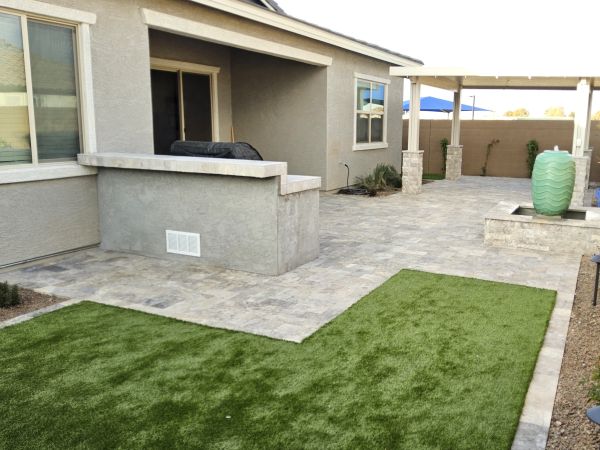
A paver patio creates a comfortable outdoor living space for relaxing, dining, and entertaining.
Homeowners can choose from various paver shapes, colors, and patterns to complement surrounding landscaping.
Patios can also provide a foundation for seating areas, decorative features, and outdoor kitchens.
Paver Driveway Installation
Paver driveways provide an attractive alternative to continuous concrete surfaces.
Driveway installations require appropriate paver thickness, structural base preparation, and edge support to accommodate vehicle traffic.
Decorative borders and coordinated patterns can enhance the appearance of the property’s entrance.
Paver Walkway Installation
A paver walkway helps connect entrances, patios, gardens, and other outdoor features.
Professional planning considers walkway width, accessibility, drainage, and comfortable transitions between surfaces.
Decorative patterns and border treatments can complement the overall landscape design.
Decorative Paver Features and Hardscape Integration
Pavers can also be incorporated into courtyards, pool surrounds, garden paths, and outdoor gathering areas.
Coordinating different hardscape features helps create visual consistency throughout the property.
Appropriate material selection should consider slip resistance, moisture exposure, and intended use.
Our Professional Paver Installation Process
Every paver project requires planning and attention to construction details.
The installation process generally involves:
- Site Evaluation: Reviewing grading, drainage, and existing conditions.
- Excavation: Preparing the area to the required depth.
- Base Construction: Installing and compacting suitable aggregate materials.
- Bedding Preparation: Establishing a consistent supporting layer.
- Paver Placement: Installing the selected pattern and adjusting individual units.
- Edge Installation: Securing the perimeter with appropriate restraints.
- Joint Finishing: Applying jointing sand and completing required compaction.
Each stage contributes to the appearance and stability of the entire project.
Why Choose MasterAZScapes for Paver Installation?
Established in 2008, MasterAZScapes is a locally owned landscaping company with 40 years of stated industry experience.
Our team approaches paver installation with attention to drainage, construction preparation, material compatibility, and landscape integration.
Our qualifications and customer-focused practices include:
- Arizona Registrar of Contractors licensing
- BBB accreditation
- Certified arborist expertise
- Free project estimates
- Experience working with homeowner associations
- Material and workmanship warranties, subject to applicable terms
We emphasize clear communication, appropriate construction techniques, and careful attention to installation details.
Customer Reviews and Paver Installation Experiences
Here’s what customers are saying about working with MasterAZScapes.


Transform Your Outdoor Space with MasterAZScapes
Professionally installed pavers can enhance your property’s appearance while creating practical surfaces for everyday activities.
Contact MasterAZScapes today to request a free paver installation estimate. Explore customized patio, driveway, and walkway options designed around your property’s needs.
Frequently Asked Questions About Paver Installation
The cost of professional paver installation depends on the project’s size, selected materials, site conditions, and construction requirements.
A small paver walkway generally requires a different investment than a large patio, decorative courtyard, or driveway designed to support vehicle traffic.
Material selection can influence pricing. Concrete pavers, brick-style products, and natural stone vary in cost, thickness, appearance, and installation requirements.
Site preparation is another important factor. Properties requiring extensive excavation, grading corrections, removal of existing concrete, or drainage improvements may involve additional labor and materials.
Complex patterns, decorative borders, and specialty finishes can also increase installation time.
For projects involving outdoor kitchens or permanent fireplaces, the paving system may need to accommodate separate structural foundations and utility connections.
Homeowners should request an itemized estimate that identifies preparation, materials, labor, edge restraints, joint finishing, and cleanup.
MasterAZScapes offers free estimates to help customers understand their proposed paver installation and evaluate available design options.
The time required for paver installation depends on the surface area, intended use, material selection, and condition of the installation site.
A relatively small walkway may require less construction time than an extensive patio or driveway involving substantial excavation and base preparation.
Installation generally begins with evaluating the site and confirming the approved layout.
Existing materials may need to be removed before excavation and grading can begin.
The contractor then installs and compacts the appropriate aggregate base, prepares the bedding material, and places the pavers in the selected pattern.
Edge restraints, jointing sand, surface compaction, and finishing details follow.
Driveways may require additional preparation to support vehicle loads, while elaborate patio patterns can involve more cutting and alignment work.
Weather, material availability, site accessibility, and unforeseen underground conditions may influence the schedule.
Homeowners should also ask when the surface can safely accommodate pedestrian or vehicle traffic.
MasterAZScapes can discuss anticipated installation stages and scheduling considerations during the estimate process.
Jointing sand and edge restraints are important components of many interlocking paver systems because they help maintain the stability of the finished surface.
Jointing sand fills the spaces between individual pavers and contributes to the interlocking action that helps distribute loads.
The appropriate sand depends on the selected paving system. Conventional jointing sand and compatible polymeric products have different installation and maintenance requirements.
Proper joint filling is important because empty or deteriorated joints can allow unwanted movement and debris accumulation.
Edge restraints provide lateral support around the perimeter, helping prevent the paving units from spreading outward.
A plastic edge restraint may be appropriate for certain pedestrian applications, but driveways require products approved for vehicular traffic.
Concrete restraints and other engineered systems may be recommended depending on the installation.
Neither jointing sand nor edge restraints can compensate for an unstable base.
MasterAZScapes considers these components when evaluating appropriate construction methods for patios, driveways, and walkways.
Pavers can sometimes be installed over an existing concrete slab, but the suitability of this approach depends on the slab’s condition, drainage, available elevation, and the selected paving system.
The concrete should be structurally sound and free from significant movement or deterioration that could compromise the finished surface.
Contractors must also evaluate how the added paver thickness will affect door thresholds, steps, drainage outlets, and adjacent landscaping.
An overlay should not trap water against the building or interfere with proper surface drainage.
Certain paving products and installation systems are specifically designed for concrete overlays, while others require a different foundation.
Driveway applications need particular consideration because the finished surface must accommodate repeated vehicle loading.
If the existing slab is severely cracked, uneven, or poorly graded, removal and replacement may be more appropriate than an overlay.
Homeowners should have the existing surface evaluated before selecting an installation method.
MasterAZScapes can review site conditions and discuss whether an overlay or a new paver foundation is more suitable.
Professionally installed pavers can provide many years of service, but their longevity depends on product quality, installation methods, environmental conditions, and maintenance.
Proper excavation, a stable aggregate base, suitable drainage, joint stabilization, and appropriate edge restraints all contribute to long-term performance.
Maintenance typically includes sweeping debris, removing stains, monitoring jointing sand, and inspecting the surface for damaged or uneven pavers.
Some paver systems may require periodic joint replenishment, particularly where heavy rainfall, cleaning, or regular traffic displaces material.
Individual paver units can often be replaced when damaged, although underlying drainage or settling problems should be corrected before repairs are completed.
Sealing may be beneficial for certain materials, but it is not universally required.
Homeowners should follow manufacturer recommendations when selecting cleaning products or sealers.
In hot, dry environments, dust accumulation and prolonged sun exposure can influence maintenance needs.
MasterAZScapes can help customers select paver materials and installation systems that support their desired appearance, intended use, and long-term maintenance preferences.