
Expert Landscape Lighting Installation for Homes and Businesses
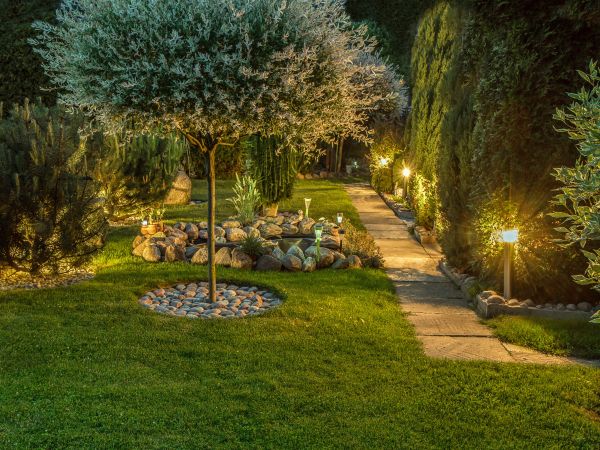
A professionally installed outdoor lighting system can enhance your property’s appearance, improve nighttime visibility, and make outdoor spaces more functional. MasterAZScapes provides landscape lighting installation services for homeowners, businesses, and property managers seeking reliable lighting solutions. From pathway lighting and step lighting to decorative accent lighting and security lighting, our experienced team helps create outdoor environments that remain welcoming after sunset.
Proper installation involves more than positioning fixtures around a property. Selecting compatible equipment, planning electrical connections, and determining appropriate fixture placement are essential for consistent performance. Our approach combines landscape expertise with practical installation considerations to support attractive, efficient outdoor illumination.
Let’s Bring Your Landscaping Ideas to Life!
Have a project in mind? From beautiful patios to custom outdoor living spaces, our team is ready to help you explore the possibilities. Tell us about your project using the form below, and let’s get started!
"*" indicates required fields
Professional Outdoor Lighting System Installation and Technical Expertise
A dependable landscape lighting system begins with evaluating the property’s layout, electrical infrastructure, and lighting requirements.
MasterAZScapes considers existing pathways, planting beds, architectural elements, and outdoor gathering areas before developing an installation plan.
Installing Low Voltage Landscape Lighting Systems
Low voltage lighting options are commonly used for residential and commercial landscaping because they provide flexible illumination for a variety of outdoor applications.
These systems typically use a transformer to reduce incoming electrical voltage to a level suitable for compatible fixtures.
Professional installation planning considers transformer capacity, cable sizing, voltage drop, fixture wattage, and connection methods.
Appropriate outdoor-rated wiring, protective components, and weather-resistant connections help support dependable system operation.
Automated Lighting Controls and Photo Sensors
Automated controls make outdoor lighting easier to manage.
A photo sensor detects changes in ambient light and can automatically activate compatible fixtures when daylight decreases.
Timers and programmable controllers provide additional scheduling options, allowing property owners to establish lighting periods that reflect their preferences.
Selecting appropriate controls helps reduce unnecessary operation and supports convenient system management.
Customized Landscape Lighting Installation Services
Pathway Lighting for Walkways and Entrances
Pathway lighting helps illuminate walkways, garden paths, driveways, and building entrances.
Fixture placement should provide consistent visibility without directing excessive brightness toward nearby windows or seating areas.
Professional installation considers walking routes, vegetation growth, soil conditions, and potential interference from irrigation equipment.
Step Lighting for Stairs and Elevated Surfaces
Step lighting improves visibility around outdoor stairs, retaining wall transitions, and raised patios.
Fixtures may be recessed into suitable structures or installed in compatible surface-mounted configurations.
Proper positioning helps illuminate changes in elevation while reducing glare.
Electrical connections and fixture housings must be appropriate for their installation locations and environmental exposure.
Accent Lighting for Landscape and Architectural Features
Accent lighting highlights selected trees, decorative stonework, planting arrangements, and architectural details.
Uplighting, downlighting, and directional fixtures can create depth and visual interest throughout the landscape.
Fixture selection should account for beam angles, brightness, and how surrounding plants may grow over time.
Security Lighting for Outdoor Property Visibility
Security lighting can improve visibility near entrances, side yards, parking areas, and other frequently accessed locations.
Motion sensors and automatic controls may be incorporated to activate compatible fixtures when needed.
Lighting should be positioned to minimize glare and unnecessary spillover onto neighboring properties.
While lighting can support visibility and security measures, it does not replace appropriate locks, monitoring, or other protective systems.
Quality Installation Practices for Long-Term Lighting Performance
Professional installation helps reduce common problems such as inconsistent brightness, damaged wiring, and unreliable electrical connections.
Important installation considerations include:
- Electrical Planning: Evaluating power requirements and compatible equipment.
- Transformer Selection: Matching capacity to the connected lighting load.
- Cable Installation: Routing and protecting wiring according to applicable requirements.
- Weather Protection: Using fixtures and connections rated for outdoor conditions.
- System Testing: Checking illumination, controls, and electrical performance.
- Maintenance Access: Positioning components for future inspections and servicing.
These practices help establish reliable lighting systems that complement the surrounding landscape.
Why Choose MasterAZScapes for Landscape Lighting Installation?
Established in 2008, MasterAZScapes is a locally owned landscaping company with 40 years of industry experience.
Our team considers landscape lighting within the broader context of property improvements, helping customers coordinate illumination with existing vegetation, pathways, and
Our qualifications and customer-focused practices include:
- Arizona Registrar of Contractors licensing
- BBB accreditation
- Certified arborist expertise
- Free project estimates
- Experience working with homeowner associations
- Material and workmanship warranties, subject to applicable terms
We emphasize thoughtful planning, clear communication, and coordination with appropriately licensed electrical professionals when required.outdoor living features.
Customer Reviews and Landscape Lighting Installation Experiences
Here’s what customers are saying about working with MasterAZScapes.


Schedule Your Landscape Lighting Installation with MasterAZScapes
An appropriately installed lighting system can enhance your outdoor environment while providing convenient illumination for everyday activities.
Contact MasterAZScapes today to request a free landscape lighting installation estimate. Explore fixture options, automated controls, and installation solutions suited to your property’s needs.
Frequently Asked Questions About Landscape Lighting Installation
The cost of professional landscape lighting installation depends on the number of fixtures, system configuration, electrical requirements, and complexity of the installation.
A small residential project involving several pathway lights may require fewer materials and less labor than a comprehensive system illuminating trees, stairs, building entrances, and outdoor entertainment areas.
Low voltage installations may require transformers, underground cabling, weather-resistant connections, and automated lighting controls.
The distance between fixtures and power sources can also influence installation requirements. Longer cable runs may require additional electrical planning to maintain consistent illumination.
Specialty fixtures, such as recessed step lights or architectural accent lights, may involve additional preparation and installation work.
Property owners should request an estimate that identifies fixture specifications, electrical components, wiring requirements, labor, and applicable warranty coverage.
When comparing proposals, consider the quality of the equipment and the installation methods rather than focusing exclusively on the lowest price.
MasterAZScapes offers free estimates to help customers evaluate their outdoor lighting needs and understand available installation options.
Low voltage and standard line voltage landscape lighting systems differ primarily in their operating voltage, electrical requirements, and typical applications.
Low voltage landscape lighting commonly operates at approximately 12 volts through a compatible transformer. It is frequently used for pathway lights, garden fixtures, accent lighting, and decorative outdoor illumination.
Standard line voltage systems use household or commercial electrical supply voltage and may be appropriate for certain floodlights, building-mounted fixtures, and larger outdoor lighting applications.
Both types require equipment designed and approved for their intended installation conditions.
Low voltage systems can offer flexibility in fixture placement, but they still require proper electrical planning, appropriate wiring, and protection from moisture and physical damage.
Line voltage installations typically involve additional electrical safety considerations and must be performed according to applicable codes by appropriately qualified professionals.
The right system depends on the desired lighting effect, available electrical infrastructure, and property requirements.
MasterAZScapes can help property owners explore lighting configurations and identify when specialized electrical installation services are necessary.
The installation timeline for landscape lighting depends on the property’s size, number of fixtures, existing electrical infrastructure, and complexity of the proposed system.
A relatively straightforward project involving a few low voltage pathway lights may require less installation time than a complete outdoor lighting system with multiple zones, step lights, security fixtures, and automated controls.
Installation typically begins with confirming the lighting layout and identifying suitable power connections.
The process may include installing transformers, routing cables, positioning fixtures, creating approved electrical connections, and configuring timers or photo sensor controls.
Once the equipment is installed, the system should be tested to confirm proper operation and consistent illumination.
Properties with extensive hardscaping, established landscaping, or limited access to electrical connections may require additional installation planning.
Certain projects may also involve permits, inspections, or coordination with licensed electrical contractors.
Homeowners should request a project-specific schedule based on the proposed installation rather than assuming every lighting system requires the same amount of time.
MasterAZScapes can discuss anticipated installation requirements during the initial estimate process.
Yes. Many landscape lighting systems can be connected to compatible timers, photo sensors, or programmable controllers to automate operation.
A photo sensor monitors ambient light levels and can activate the lighting system when daylight decreases.
This allows outdoor fixtures to operate without requiring property owners to turn them on manually each evening.
Timers provide another option by allowing lights to follow a predetermined schedule.
Some systems combine photo sensors with timers, activating lights at dusk and switching them off after a designated period.
More advanced controllers may support multiple lighting zones or customized schedules.
The appropriate control depends on the lighting system’s voltage, connected load, and equipment compatibility.
Outdoor controls must also be suitable for their installation environment and protected against moisture and other environmental conditions.
Automated operation can improve convenience and help avoid unnecessary energy use, although settings should be reviewed periodically.
MasterAZScapes can help customers explore lighting control options that complement their preferred outdoor lighting arrangement.
Landscape lighting systems require periodic maintenance to maintain consistent illumination and dependable operation.
Outdoor fixtures are exposed to moisture, dust, temperature changes, soil movement, and landscaping activities that can affect their condition over time.
Routine maintenance generally includes cleaning fixture lenses, inspecting visible wiring, checking electrical connections, and confirming that lights remain properly positioned.
Vegetation may grow around fixtures and block illumination, making occasional adjustments necessary.
Property owners should also examine pathway and step lights for physical damage caused by foot traffic, landscape equipment, or shifting materials.
Timers and photo sensors should be checked periodically to confirm that the lighting system operates according to the intended schedule.
If fixtures flicker, become unusually dim, or stop functioning, the issue may involve damaged connections, transformer problems, or incompatible equipment.
Electrical components should be serviced by appropriately qualified professionals when necessary.
Regular inspections can help identify minor issues before they affect larger portions of the lighting system.
MasterAZScapes can help customers consider maintenance accessibility and long-term performance when planning their outdoor lighting installation.