Professional Artificial Turf Installation for Homes and Businesses
A beautiful, green lawn doesn’t have to require constant mowing, watering, or fertilizing. MasterAZScapes provides professional artificial turf installation for homeowners, businesses, and property managers seeking attractive, low-maintenance landscaping solutions. Whether you’re converting a natural lawn, landscaping a new property, or creating a functional outdoor gathering area, our experienced team helps design and install artificial grass that complements your surroundings.
Artificial turf is a flexible material that can accommodate different landscape layouts, but achieving a smooth, natural-looking finish requires more than simply rolling out synthetic grass. Proper preparation, drainage planning, and installation techniques contribute to a durable surface that performs as intended.
Let’s Bring Your Landscaping Ideas to Life!
Have a project in mind? From beautiful patios to custom outdoor living spaces, our team is ready to help you explore the possibilities. Tell us about your project using the form below, and let’s get started!
"*" indicates required fields
Professional Artificial Grass Installation Starts with Proper Site Preparation
The quality of an artificial turf installation depends heavily on the work completed beneath the visible surface.
MasterAZScapes evaluates soil conditions, grading, drainage, and intended lawn use before determining the appropriate installation approach.
Preparing a Stable Base for Artificial Turf
A properly installed base material helps provide a stable foundation for artificial grass.
Depending on site conditions, preparation may involve removing existing vegetation, excavating unsuitable soil, installing crushed aggregate, and compacting the surface.
The base should support consistent grading while allowing appropriate drainage.
Skipping these steps can contribute to uneven surfaces, visible depressions, and premature installation problems.
Selecting Appropriate Infill Materials
Infill materials are distributed between artificial grass fibers to help support the turf structure and provide stability.
Different products offer varying characteristics related to drainage, weight, surface temperature, and maintenance.
The appropriate infill depends on the turf manufacturer’s specifications and how the landscape will be used.
For example, pet-friendly areas and frequently used recreational spaces may benefit from materials selected for their specific performance requirements.
Customized Artificial Turf Installation Solutions
Residential Lawn and
Backyard Turf Installation
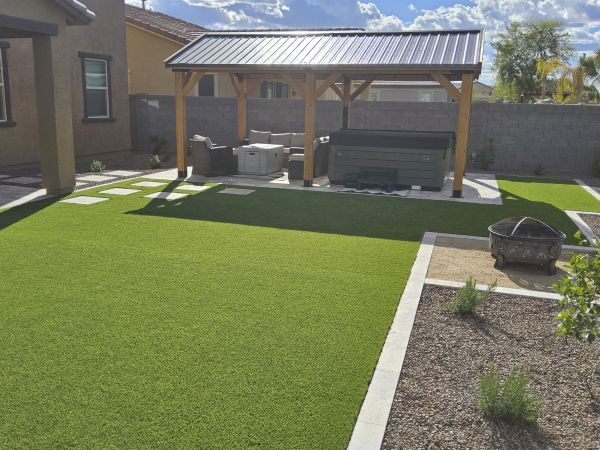
Artificial turf provides homeowners with a consistent lawn appearance without the irrigation and mowing requirements of natural grass.
It can be incorporated into front yards, family backyards, garden areas, and outdoor entertainment spaces.
Our landscape planning considers turf placement, surrounding hardscaping, and transitions to existing planting beds.
Commercial Artificial Grass Installation
Commercial properties often require landscaping that maintains an attractive appearance despite frequent use and demanding maintenance schedules.
Artificial turf can be suitable for designated outdoor gathering areas, decorative landscape features, and selected commercial spaces.
Material durability, drainage, accessibility, and anticipated foot traffic should guide the installation.
Pet-Friendly and
Recreational Turf Areas
Properties with pets or frequently used play spaces require careful attention to surface performance.
Appropriate turf products, drainage systems, and infill materials can support cleaning and everyday use.
The installation should also account for safe transitions, secure perimeter edges, and suitable maintenance access.
Why Technical Expertise Matters During Artificial Turf Installation
Although the installation process may seem simple, professional results depend on accurate measurements, correct material placement, and attention to finishing details.
Important installation practices include:
- Accurate Layout: Planning turf orientation and minimizing unnecessary seams.
- Base Compaction: Creating a stable foundation that supports the finished surface.
- Proper Drainage: Managing water movement beneath and around the turf.
- Precise Cutting: Shaping material around pathways, patios, and landscape borders.
- Secure Seaming: Connecting adjoining sections according to product specifications.
- Infill Application: Distributing suitable materials evenly to support turf performance.
Professional technical expertise helps prevent avoidable installation problems while supporting a consistent, finished appearance.
Why Choose MasterAZScapes for Artificial Turf Installation?
Established in 2008, MasterAZScapes is a locally owned landscaping company with 40 years of stated industry experience.
Our team approaches artificial turf installation as part of a complete landscape improvement, considering both appearance and practical performance.
Our qualifications and customer-focused practices include:
- Arizona Registrar of Contractors licensing
- BBB accreditation
- Certified arborist expertise
- Free project estimates
- Experience working with homeowner associations
- Material and workmanship warranties, subject to applicable terms
We emphasize clear communication, thoughtful material selection, and professional installation methods tailored to each property’s conditions.
Customer Reviews and Artificial Turf Installation Experiences
Here’s what customers are saying about working with MasterAZScapes.


Schedule Your Artificial Turf Installation with MasterAZScapes
Transform your property with artificial turf designed to complement your landscape and reduce routine lawn maintenance.
Contact MasterAZScapes today to request a free artificial turf installation estimate. Our team can help you explore turf materials, installation requirements, and design options suited to your outdoor space.
Frequently Asked Questions About Artificial Turf Installation
The cost of professional artificial turf installation depends on the size of the installation area, site conditions, selected materials, and the amount of preparation required.
Properties with existing natural grass may require vegetation removal, excavation, and base preparation before artificial turf can be installed.
Material selection also affects pricing. Artificial grass products differ in fiber density, pile height, backing construction, drainage characteristics, and intended applications.
Additional expenses may include drainage improvements, specialized infill materials, perimeter edging, and adjustments around existing hardscaping.
A relatively straightforward rectangular lawn may require less labor than a property with curved borders, multiple planting beds, or restricted access.
When comparing estimates, property owners should consider what is included in the installation rather than focusing exclusively on the price per square foot.
A professional proposal should explain preparation requirements, turf specifications, installation methods, and any applicable warranty coverage.
MasterAZScapes offers free estimates to help customers understand their project requirements and evaluate suitable artificial turf options.
The appropriate base material for artificial turf depends on soil conditions, drainage requirements, expected foot traffic, and the manufacturer’s installation specifications.
Compacted crushed aggregate is commonly used because it can provide a stable foundation beneath the synthetic surface.
The required base depth and aggregate composition vary according to the installation area and existing ground conditions.
Before the base is installed, vegetation and unsuitable surface materials are typically removed. The underlying soil may also require grading or compaction.
Proper preparation helps reduce the risk of depressions, shifting, and uneven turf placement.
Drainage is another important consideration. The base should be designed to manage water appropriately rather than trap moisture beneath the artificial grass.
Some installations require additional drainage measures depending on the property’s slope and soil characteristics.
Installing artificial grass directly over unprepared ground may create avoidable performance problems.
MasterAZScapes evaluates site conditions to determine the appropriate preparation and supporting materials for a professional installation.
Artificial turf generally should not be installed directly over an existing natural grass lawn without appropriate preparation.
Living grass, roots, and other organic materials can deteriorate beneath the synthetic surface, potentially creating uneven areas and interfering with the installation’s stability.
A professional installation typically begins by removing the existing vegetation and preparing the underlying soil.
Depending on the property’s condition, the process may involve excavation, grading, compacting the subgrade, and installing a suitable aggregate foundation.
Existing irrigation components may also need to be evaluated. Some lines may be capped, removed, or retained to serve nearby planting beds.
Proper preparation provides an opportunity to address drainage concerns before the artificial grass is installed.
The turf is then measured, positioned, trimmed, secured, and finished according to the manufacturer’s specifications.
Although removing natural grass adds an initial preparation step, it helps create a more stable foundation for the finished lawn.
MasterAZScapes can assess an existing landscape and recommend an installation approach that accounts for its specific conditions.
The time needed for artificial turf installation depends on the property’s size, accessibility, existing landscape conditions, and the amount of site preparation required.
A small lawn with relatively level ground may require less time than a large installation involving extensive vegetation removal, grading, or drainage adjustments.
The installation process generally includes removing existing materials, preparing the subgrade, installing and compacting the base, positioning turf sections, securing seams, and distributing infill.
Projects with curved pathways, decorative landscape borders, or multiple hardscape transitions may require additional measuring and cutting.
Weather conditions can also affect scheduling, especially when excavation or base preparation is involved.
After installation, the turf should be inspected for secure edges, consistent seams, and appropriate infill distribution.
Property owners should request a project-specific schedule rather than assume every artificial grass installation can be completed within the same timeframe.
MasterAZScapes can discuss anticipated installation steps and scheduling considerations during the estimate process.
Artificial turf can be a practical landscaping investment for properties where reducing routine lawn maintenance and irrigation is a priority.
Unlike natural grass, synthetic turf does not require regular mowing, fertilizing, or conventional lawn watering to maintain its appearance.
This can make it attractive for residential backyards, decorative commercial landscapes, and outdoor areas where maintaining natural grass is challenging.
However, artificial turf still requires periodic cleaning, debris removal, and inspections.
Its surface can also become considerably hotter than natural grass in direct sunlight, making shade and material selection important considerations.
The overall value depends on installation costs, anticipated maintenance, expected product lifespan, and how frequently the space will be used.
Commercial properties may prioritize appearance and durability, while homeowners may place greater emphasis on comfort, pets, or recreational activities.
A professionally designed installation should account for these different requirements.
MasterAZScapes can help property owners evaluate whether artificial turf is appropriate for their landscape and identify suitable installation options.