
Custom Walkway Installation for Beautiful and Functional Landscapes
A professionally installed walkway creates an attractive, convenient connection between different areas of your property. MasterAZScapes provides walkway installation services for homeowners and commercial property owners looking to improve accessibility, enhance curb appeal, and complement their existing landscaping. Whether you envision a decorative paver walkway, a natural stone garden path, or a welcoming entrance walkway, our experienced team helps develop solutions suited to your outdoor space.
A well-designed walkway should provide more than visual appeal. Proper material selection, stable foundations, and effective drainage are essential for creating comfortable walking surfaces. Our approach combines thoughtful landscape planning with professional installation practices to support lasting functionality.
Let’s Bring Your Landscaping Ideas to Life!
Have a project in mind? From beautiful patios to custom outdoor living spaces, our team is ready to help you explore the possibilities. Tell us about your project using the form below, and let’s get started!
"*" indicates required fields
Professional Walkway Design and Installation Expertise
Successful walkway installation begins with evaluating the property’s layout, soil conditions, drainage patterns, and intended pedestrian traffic.
MasterAZScapes considers how the proposed pathway will connect entrances, patios, gardens, and other outdoor features.
Planning Walkway Layouts and Proper Drainage
An effective walkway design should establish convenient routes while complementing surrounding landscaping.
Important planning considerations include:
- Walkway Width: Providing appropriate space for comfortable pedestrian movement.
- Surface Stability: Selecting suitable materials and foundation systems.
- Drainage: Establishing proper slopes to prevent unnecessary water accumulation.
- Accessibility: Considering surface transitions, elevation changes, and walking conditions.
- Landscape Integration: Coordinating pathways with planting beds, trees, and irrigation systems.
- Material Selection: Choosing durable surfaces appropriate for the intended application.
These details help establish an attractive walkway that functions as part of the overall landscape.
Custom Walkway Installation Options
Paver Walkway Installation
A paver walkway offers flexibility in materials, colors, textures, and decorative patterns.
Different types of pavers can create traditional, contemporary, or rustic appearances depending on the property’s architectural style.
Professional paver installation requires appropriate excavation, base preparation, bedding materials, and edge restraints.
Jointing materials should be selected according to the paving system’s specifications.
Natural Stone Garden Walkways
Natural stone walkways introduce distinctive textures and organic character into outdoor landscapes.
Flagstone and other suitable stone varieties can complement garden paths, decorative planting areas, and backyard retreats.
Installation methods vary depending on the stone’s thickness, surface characteristics, and intended use.
Appropriate preparation helps maintain stable walking surfaces and consistent transitions.
Concrete Walkway Installation
Concrete walkways offer a continuous surface suitable for entrances, side yards, and connections between outdoor living areas.
Finish options may include traditional broom textures or decorative surface treatments.
Proper subgrade preparation, drainage, joint placement, and curing contribute to the finished walkway’s performance.
Decorative Borders and Custom Walkway Patterns
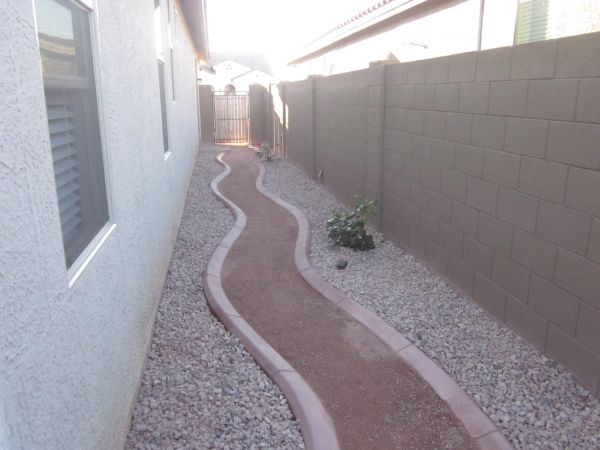
Decorative border stones can define pathway edges and create attractive transitions between paving and surrounding landscaping.
Paver stones may also be arranged in running bond, herringbone, or other compatible patterns.
Coordinated colors and textures help establish visual consistency throughout the property.
Professional Walkway Installation and Landscape Integration
A successful installation requires careful preparation beneath the finished surface.
Depending on the materials selected, construction may involve excavation, compacted aggregate, bedding preparation, paving installation, and joint finishing.
Walkways should also accommodate existing irrigation lines, tree roots, and appropriate drainage routes.
Outdoor lighting can further improve walkway visibility after sunset. Pathway fixtures and step lighting may complement the finished design when installed using appropriate outdoor-rated equipment.
Why Choose MasterAZScapes for Walkway Installation?
Established in 2008, MasterAZScapes is a locally owned landscaping company with 40 years of industry experience.
Our team combines practical hardscaping knowledge with landscape design considerations to help customers create coordinated outdoor improvements.
Our qualifications and customer-focused practices include:
- Arizona Registrar of Contractors licensing
- BBB accreditation
- Certified arborist expertise
- Free project estimates
- Experience working with homeowner associations
- Material and workmanship warranties, subject to applicable terms
We emphasize clear communication, appropriate construction methods, and thoughtful material selection throughout each project.
Customer Reviews and Walkway Installation Experiences
Here’s what customers are saying about working with MasterAZScapes.


Enhance Your Property with MasterAZScapes
A professionally installed walkway can improve the appearance of your property while creating convenient access between outdoor areas.
Contact MasterAZScapes today to request a free walkway installation estimate. Explore customized walkway materials, decorative patterns, and installation options that complement your landscaping goals.
Frequently Asked Questions About Walkway Installation
The cost of professional walkway installation depends on the pathway’s length, width, selected materials, site conditions, and design complexity.
A straightforward concrete walkway generally has different material and labor requirements than a decorative paver walkway featuring intricate patterns, contrasting border stones, or natural stone surfaces.
Existing site conditions can also influence the overall cost. Properties requiring extensive excavation, removal of old paving, grading corrections, or drainage improvements may involve additional preparation.
Homeowners should also consider whether the walkway will include steps, retaining features, or integrated outdoor lighting.
For Arizona properties, material selection should account for prolonged sunlight, high surface temperatures, and seasonal storm runoff.
A detailed estimate should identify site preparation, base materials, paving products, installation labor, and finishing requirements.
Homeowners should also verify the contractor’s relevant licensing and insurance coverage.
MasterAZScapes offers free estimates to help property owners evaluate walkway options and understand the proposed installation scope.
The most appropriate outdoor walkway material depends on the property’s architecture, intended use, maintenance preferences, and environmental conditions.
Concrete pavers are popular because they offer a variety of shapes, colors, textures, and installation patterns.
They can create attractive pathways connecting entrances, patios, and landscaped areas.
Natural stone provides distinctive visual character and may complement rustic or garden-inspired landscapes.
However, stone varieties differ in thickness, surface texture, and installation requirements.
Poured concrete offers a continuous walking surface and can incorporate decorative finishing techniques.
Homeowners should also evaluate slip resistance, surface stability, drainage, and maintenance requirements.
In Arizona’s hot climate, darker paving materials may become uncomfortable under direct sunlight. Lighter-colored surfaces can be worth considering, although actual temperatures vary by product.
Walkways serving frequently used entrances should prioritize stable, comfortable walking conditions.
MasterAZScapes can help homeowners compare suitable materials and select walkway designs that complement the surrounding landscape.
The appropriate walkway width depends on the route’s intended use, available space, accessibility requirements, and surrounding landscaping.
A narrow garden path used occasionally may require less width than a primary entrance walkway used by multiple people.
For many residential applications, a walkway approximately 36 inches wide may provide basic pedestrian passage, while wider pathways can offer more comfortable movement.
However, accessibility regulations and local building requirements may establish additional standards for certain properties and applications.
Commercial walkways and designated accessible routes can have specific requirements involving clear width, slopes, cross slopes, and surface conditions.
Homeowners should also consider whether the path needs to accommodate wheelbarrows, landscaping equipment, or other frequent activities.
Curved walkways may require additional space around turns.
In Arizona landscapes, pathway placement should also account for mature vegetation, irrigation equipment, and shade availability.
MasterAZScapes can help evaluate walkway dimensions based on the property’s layout and intended use.
The installation timeline for a walkway depends on its dimensions, selected material, ground conditions, and complexity.
A short, straightforward pathway may require less construction time than an extensive walkway involving curves, elevation changes, decorative borders, or significant excavation.
The process generally begins with confirming the layout and preparing the installation area.
For paver walkways, preparation typically involves excavation, establishing an appropriate aggregate base, preparing bedding materials, and placing the selected pavers.
Compatible edge restraints and jointing materials are then installed according to the paving system’s requirements.
Concrete walkways require subgrade preparation, formwork, placement, finishing, and appropriate curing.
Natural stone installations may involve additional fitting and leveling work.
Weather conditions, existing utilities, drainage improvements, and material availability can influence scheduling.
Homeowners should ask when the completed walkway will be ready for normal pedestrian use.
MasterAZScapes can discuss anticipated installation stages and project scheduling during the estimate process.
Yes. Outdoor lighting can often be incorporated into both new and existing walkways to improve nighttime visibility and complement the surrounding landscaping.
Pathway lighting can illuminate walking routes between entrances, patios, gardens, and other frequently used areas.
Low-voltage landscape fixtures are commonly used for these applications when installed with compatible transformers and appropriate electrical components.
Step lighting may be useful where walkways include stairs or elevation changes.
For new walkway installations, planning lighting locations early can help coordinate underground wiring with excavation and paving work.
Existing walkways may also accommodate lighting, although installation methods depend on surrounding landscaping, available electrical connections, and surface materials.
Fixtures should be positioned to reduce glare while providing suitable illumination across walking surfaces.
For Arizona properties, outdoor equipment should be selected with consideration for heat, dust, and seasonal weather exposure.
Electrical work must follow applicable safety requirements.
MasterAZScapes can help homeowners explore walkway lighting arrangements that complement their existing or proposed landscape design.