
Expert Tree Removal Services for Residential and Commercial Properties
Dead, damaged, or poorly positioned trees can create serious concerns for property owners. MasterAZScapes provides professional tree removal services for homeowners, businesses, and property managers who need to address hazardous trees, remove unwanted vegetation, or prepare their properties for landscape improvements.
Removing a tree requires more than cutting down its trunk. Every project involves evaluating the tree’s condition, surrounding structures, available access, and potential hazards. Our experienced team approaches tree removals with attention to safety, property protection, and responsible landscaping practices.
Whether you need palm tree removal or assistance with a large shade tree, professional assessment helps determine an appropriate removal approach.
Let’s Bring Your Landscaping Ideas to Life!
Have a project in mind? From beautiful patios to custom outdoor living spaces, our team is ready to help you explore the possibilities. Tell us about your project using the form below, and let’s get started!
"*" indicates required fields
Professional Tree Removal Expertise and Safety Standards
Tree removal is specialized work that requires careful planning, appropriate equipment, and an understanding of tree structure.
MasterAZScapes considers the tree’s size, condition, location, and surrounding environment before developing a removal plan.
Evaluating Tree Health and Potential Hazards
Not every unhealthy tree requires immediate removal. However, certain conditions may indicate structural instability or an increased risk of failure.
Important considerations include:
- Dead or Dying Branches: Identifying significant canopy deterioration.
- Structural Damage: Evaluating cracks, splitting, or compromised trunks.
- Root Problems: Looking for visible root damage, soil movement, or instability.
- Tree Lean: Determining whether leaning indicates a structural concern.
- Nearby Structures: Assessing buildings, fences, utility lines, and landscaping.
- Access and Equipment: Identifying appropriate methods for completing the work.
Certified arborists can help evaluate tree conditions and determine whether removal or another tree care option is appropriate.
Planning a Controlled Tree Removal Process
Professional tree service companies use site-specific removal techniques based on tree condition and surrounding hazards.
Some trees may be suitable for directional felling when adequate clearance exists. Others require controlled sectional dismantling because buildings, landscaping, or other obstacles prevent removal in one piece.
Complex removals demand advanced skills, specialized equipment, and appropriate safety procedures.
Professional Tree Removal Services
Hazardous and Damaged Tree Removal
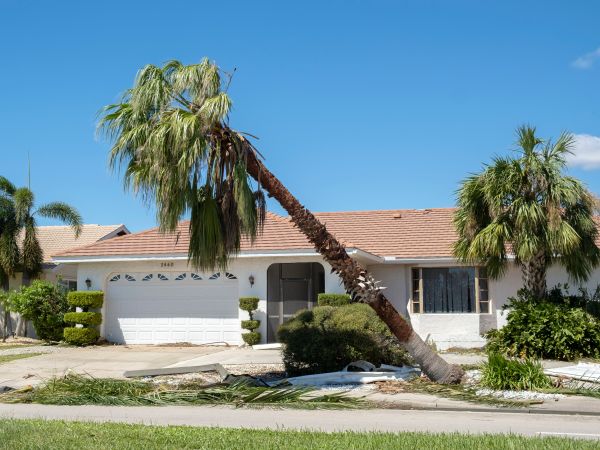
Trees affected by extensive decay, structural failure, or severe storm damage may present a potential issue for nearby structures and outdoor areas.
Professional evaluation helps identify hazards and determine appropriate removal methods.
Where necessary, the tree may be dismantled in sections to reduce the risk of damaging surrounding property.
Palm Tree Removal
Palm tree removal presents unique challenges because palm trunks, fronds, and growth characteristics differ from those of conventional branching trees.
Tall palms may require specialized access equipment and careful management of heavy fronds and trunk sections.
The appropriate method depends on the palm’s height, condition, and proximity to buildings or other landscape features.
Tree Removal for Landscape Renovations
Tree removal may be necessary when preparing for new patios, walkways, outdoor living areas, or substantial landscape redesigns.
Before removing a healthy tree, property owners should consider its shade benefits, mature size, and whether the proposed improvement can accommodate it.
When removal is appropriate, careful planning helps protect surrounding plants, irrigation equipment, and hardscaping.
Large Tree Removal and Property Protection
Large trees require additional attention to weight distribution, rigging requirements, equipment access, and nearby hazards.
Removal plans should account for structures, overhead utilities, and the available working area.
Trees contacting electrical lines require coordination with the utility provider and appropriately qualified professionals.
Our Professional Tree Removal Process
Although each project is different, the general process includes:
- Initial Assessment: Reviewing the tree’s condition and surrounding hazards.
- Removal Planning: Selecting suitable equipment and removal techniques.
- Site Preparation: Establishing work zones and protecting nearby property.
- Controlled Removal: Removing branches and trunk sections as appropriate.
- Debris Management: Addressing removed tree materials according to the agreed scope.
- Final Review: Checking the work area and discussing any remaining landscape needs.
Stump grinding or complete stump removal should be confirmed separately when requesting an estimate.
Why Choose MasterAZScapes for Tree Removal?
Established in 2008, MasterAZScapes is a locally owned landscaping company with 40 years of industry experience.
Our approach combines landscape knowledge with professional tree care considerations, helping customers make informed decisions about removal and surrounding property improvements.
Our qualifications and customer-focused practices include:
- Arizona Registrar of Contractors licensing
- BBB accreditation
- Certified arborist expertise
- Free project estimates
- Experience working with homeowner associations
- Material and workmanship warranties, subject to applicable terms
We emphasize communication, careful assessment, and appropriate planning throughout the tree removal process.
Customer Reviews and Tree Removal Experiences
Here’s what customers are saying about working with MasterAZScapes.


Schedule Professional Tree Removal with MasterAZScapes
Whether you’re concerned about a damaged tree, planning a landscape renovation, or considering palm tree removal, a professional evaluation can help determine the appropriate next steps.
Contact MasterAZScapes today to request a free tree removal estimate. Discuss your property’s needs and explore removal options suited to the tree’s condition and location.
Frequently Asked Questions About Tree Removal
The cost of professional tree removal depends on the tree’s height, trunk size, condition, location, and the complexity of the work.
A relatively small tree in an accessible yard may require less labor and equipment than a mature tree positioned near a building, fence, swimming pool, or overhead utility line.
Trees that cannot be safely felled in one piece may require sectional removal and specialized rigging equipment.
Palm tree removal costs can also vary depending on height, accessibility, and the amount of material requiring disposal.
For Arizona properties, mature desert trees may present additional challenges because of their branching structures, surrounding vegetation, or proximity to established landscaping.
Homeowners should request an estimate identifying the removal work, equipment requirements, debris handling, and whether stump grinding is included.
It is also important to confirm that the tree care company carries appropriate insurance and qualifications for the proposed work.
MasterAZScapes offers free estimates to help property owners evaluate tree removal requirements.
Determining whether a tree needs removal depends on its structural condition, health, location, and the risks associated with keeping it.
Some trees experiencing drought stress, pest activity, or isolated branch damage may benefit from professional treatment or pruning rather than complete removal.
However, extensive trunk decay, major structural cracks, significant root damage, or severe instability may indicate that removal deserves consideration.
Homeowners should not assume that every leaning tree is dangerous. Some trees naturally develop leaning growth patterns, while others lean because of root failure or changing soil conditions.
An arborist assessment can help distinguish these situations.
In Arizona, extreme heat, prolonged drought, and seasonal monsoon winds can contribute to tree stress or expose existing structural weaknesses.
Warning signs should be evaluated in context rather than treated as automatic proof that a tree is beyond recovery.
MasterAZScapes can help customers explore appropriate tree care decisions based on visible conditions and the surrounding landscape.
Yes. Palm tree removal differs from removing many conventional trees because palms have distinctive trunk structures, growth characteristics, and canopy arrangements.
Unlike many branching trees, palms generally have a central trunk topped by fronds, although their exact form varies by species.
Large palm fronds and seed clusters can be heavy, making controlled handling important during removal.
Tall palms may require specialized equipment to access the upper canopy and dismantle the trunk safely.
In Arizona, palm species such as Mexican fan palms and date palms are common landscape features, but their height, trunk diameter, and surrounding conditions can create different removal challenges.
Removing a palm near a house, swimming pool, or enclosed courtyard requires careful planning to protect nearby structures.
Homeowners should also ask whether stump removal, debris hauling, and site restoration are included in the proposed work.
A professional tree service company should evaluate the specific palm and its surroundings before selecting a removal method.
Tree removal requirements depend on the property’s jurisdiction, the tree’s status, and any applicable community restrictions.
Not every privately owned tree requires a removal permit. However, some municipalities protect certain tree species, regulate trees within designated areas, or establish requirements for trees associated with development projects.
Homeowners should also determine whether the tree is located entirely on their property or near a shared boundary.
In Arizona, native and protected plant regulations can be relevant to certain species and property conditions.
Homeowner associations may have additional landscaping rules that require approval before removing established trees.
HOA approval does not replace any permits required by local authorities.
Before scheduling removal, property owners should check applicable municipal rules and review their community’s landscaping guidelines.
Trees near power lines may also require coordination with the utility provider.
MasterAZScapes works with HOAs and can help customers discuss site considerations, while formal permitting requirements should be confirmed with the responsible authority.
The urgency of tree removal depends on the tree’s condition, its surroundings, and whether there are signs of imminent failure.
A tree with newly exposed roots, major trunk splitting, substantial movement at the base, or broken branches suspended over occupied areas may require prompt professional attention.
If a tree appears unstable, people and pets should be kept away from the affected area until it has been evaluated.
Never approach a tree touching an electrical line. Contact the utility provider or emergency services as appropriate.
In Arizona, monsoon storms and strong winds can cause branch failures or expose weaknesses in already compromised trees.
However, a tree that has leaned gradually for many years is not necessarily an emergency.
A qualified tree professional can assess visible hazards and determine whether removal, pruning, monitoring, or another approach is appropriate.
Homeowners should avoid attempting complicated tree removals themselves, particularly when large branches, buildings, or electrical infrastructure are involved.
MasterAZScapes can discuss tree removal concerns and available assessment options, with response times confirmed when scheduling.