Grow More Shade and Beauty in Your Landscape with Trees
MasterAZScapes provides professional tree planting in Phoenix, AZ, helping homeowners introduce shade, natural beauty, and lasting character to their outdoor spaces. Whether you’re adding native trees to a desert landscape or replacing a tree that no longer thrives, proper species selection and planting techniques make a difference in Arizona’s demanding climate.
Trees can improve the comfort of patios and walkways, contribute to air quality, and help soften the effects of urban heat. Their foliage may also provide some separation from nearby activity and noise pollution.
However, not every tree is suited to the Phoenix area. Choosing the right species and planting location is essential for healthy long-term growth.
Choosing the Right Trees for Your Phoenix Property
The ideal tree depends on your landscape’s available space, sunlight, irrigation, and desired appearance.
Native Trees for Desert Landscapes
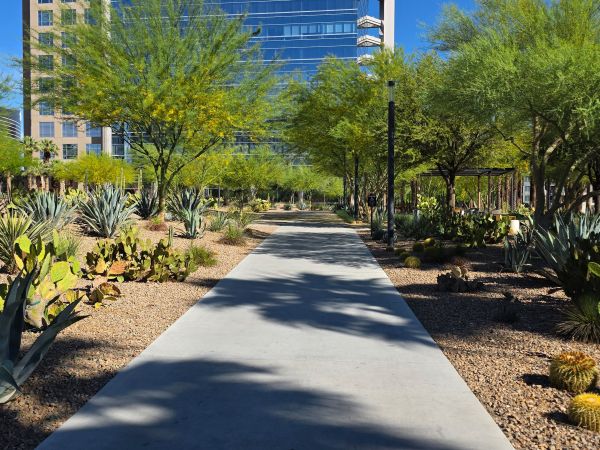
Native trees such as blue palo verde, foothills palo verde, ironwood, and velvet mesquite are adapted to Sonoran Desert conditions.
These species can provide seasonal interest and valuable shade while generally requiring less supplemental water once established than many high-water-use alternatives.
For homes near South Mountain Park and Preserve, native trees can complement existing desert landscaping.
Shade Trees for Residential Outdoor Spaces
Shade trees can make outdoor living areas more comfortable and help reduce direct sunlight on selected surfaces.
For properties in Arcadia or Biltmore, carefully placed trees may provide future shade for patios, walkways, or portions of the home.
Species selection should consider mature canopy width, root growth, available soil, and nearby structures.
Ornamental Trees for Smaller Yards
Compact properties in Willo or the Melrose District may benefit from smaller ornamental trees that introduce color and texture without overwhelming the available planting space.
A suitable tree should complement the surrounding trees and shrubs while allowing room for healthy growth.
Tree Placement Matters as Much as Tree Selection
A tree that fits comfortably into a nursery container may eventually develop a broad canopy and extensive root system.
Before planting, homeowners should consider overhead power lines, underground utilities, irrigation pipes, walkways, and building foundations.
Trees should also be positioned where their mature size will not obstruct necessary visibility or access.
For homes near Roosevelt Row Arts District, limited planting areas can make thoughtful spacing especially important.
Proper placement helps reduce future conflicts and creates a landscape that can mature naturally.
What Professional Tree Planting Involves
Preparing the Planting Area
Tree planting begins with evaluating the site and soil conditions.
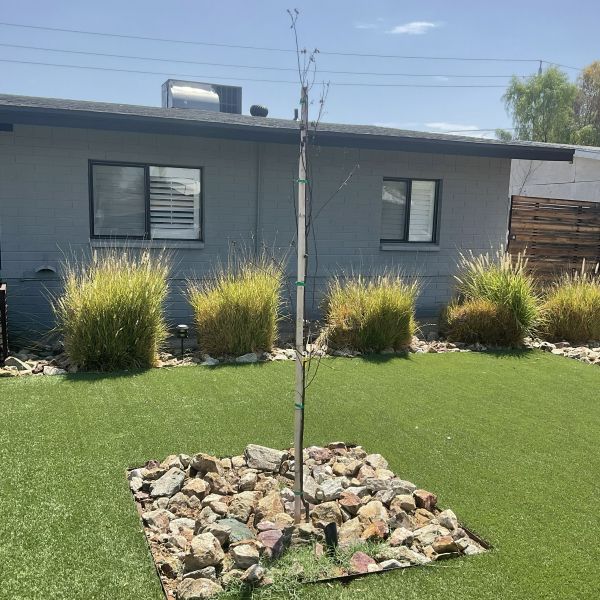
Appropriate planting techniques generally involve a wide hole that is no deeper than the root ball, allowing roots to expand into the surrounding soil.
The root flare should remain at the correct height rather than being buried beneath excessive soil or mulch.
For properties near Tovrea Castle at Carraro Heights, rocky or compacted ground may require additional site preparation.
Installing and Establishing the Tree
During planting, the root ball should be handled carefully to minimize damage.
Backfilling with suitable native soil and watering the planting area help establish contact between roots and the surrounding ground.
Staking should be used only when necessary and removed when the tree can support itself.
Professional planting also includes considering irrigation access and the tree’s ongoing maintenance needs.
Helping Newly Planted Trees Thrive in Phoenix
Even drought-tolerant trees need supplemental water while their root systems become established.
The watering schedule should reflect species, soil drainage, tree size, and seasonal temperatures.
As a tree matures, watering practices should shift toward encouraging deeper root growth rather than maintaining frequent shallow irrigation.
For established residential landscapes near Wesley Bolin Memorial Plaza, existing irrigation systems may need adjustments when new trees are introduced.
Fall is often an excellent planting season in Phoenix because cooler air temperatures support establishment without the most intense summer heat.
Tree Planting Experience with MasterAZScapes
MasterAZScapes is a locally owned landscaping company established in 2008, bringing 18 years in business to Phoenix residential landscaping projects.
Our landscape design experience helps homeowners coordinate new trees with planting beds, irrigation, hardscapes, and outdoor living areas.
MasterAZScapes is BBB Accredited and identifies Arizona contractor licensing and certified arborist expertise among its qualifications. The company offers free estimates and material and workmanship warranties subject to applicable terms.
Customer Reviews
Here’s what Phoenix homeowners are saying about working with MasterAZScapes.


Plant the Right Tree for Your Phoenix Landscape
Whether you’re creating more shade or refreshing your yard with native trees, MasterAZScapes can help you explore planting options suited to your property.
Call MasterAZScapes at (602) 975-3648 to request a free tree planting estimate in Phoenix, AZ.
Frequently Asked Questions About Tree Planting in Phoenix, AZ
Several native and desert-adapted trees can work well in Phoenix, AZ, depending on the property’s available space and landscape conditions.
Blue palo verde, foothills palo verde, ironwood, and velvet mesquite are among the tree species identified in the City of Phoenix’s desert planting guidance.
Each has different characteristics, including mature size, canopy shape, growth habits, and maintenance considerations.
For homeowners near South Mountain Park and Preserve, native trees can help create a landscape that complements the surrounding Sonoran Desert.
Properties in Arcadia or Biltmore may have enough room for larger shade trees, while smaller yards require more selective planting.
Drought tolerance does not mean a newly planted tree can survive without irrigation.
Even native species need appropriate establishment watering, and their long-term performance depends on soil conditions, planting depth, and suitable placement.
Homeowners should also consider thorns, seasonal litter, and clearance from walkways.
MasterAZScapes can help homeowners explore tree species that suit their landscape design and maintenance preferences.
Fall is generally an excellent time for tree planting in Phoenix, AZ, because cooler air temperatures can reduce transplant stress while soil temperatures remain suitable for root growth.
The University of Arizona Cooperative Extension identifies late fall as an ideal planting period for many desert plants, with exceptions for frost-sensitive species.
Early spring can also be suitable, although trees may have less time to establish before the most intense summer temperatures arrive.
For homeowners in Willo or the Melrose District, scheduling planting during a milder season can make establishment care more manageable.
Planting during extreme summer heat may require additional precautions and more intensive watering.
However, seasonal recommendations should always be considered alongside the tree’s specific needs and current weather.
Newly planted trees need monitoring during their first growing seasons, regardless of installation timing.
MasterAZScapes can discuss planting schedules and tree selection based on the property’s conditions and the homeowner’s goals.
Professional tree planting costs in Phoenix, AZ, vary according to tree species, nursery size, planting conditions, delivery requirements, and installation complexity.
A smaller container-grown tree typically involves different handling requirements from a large specimen tree that needs specialized transportation or equipment.
Site preparation can also affect the project.
For established properties in Arcadia, existing tree roots, hardscapes, and underground irrigation lines may influence planting access.
A compact yard near Roosevelt Row Arts District may present equipment limitations, while a larger property in Biltmore may accommodate several trees as part of a comprehensive landscape plan.
Additional work may include removing unsuitable vegetation, modifying irrigation, preparing planting areas, and installing mulch.
Homeowners should request an estimate explaining tree size, species, delivery, installation, and any establishment-care responsibilities.
MasterAZScapes offers free estimates to help Phoenix homeowners evaluate planting options and understand the anticipated project scope before making a decision.
Newly planted trees in Phoenix, AZ, generally require more frequent irrigation than established trees because their root systems have not yet expanded into the surrounding soil.
The appropriate schedule depends on the species, root-ball size, soil type, drainage, season, and weather conditions.
During establishment, water should reach the root ball and surrounding soil rather than wetting only the surface.
As roots develop, watering practices can gradually shift toward less frequent, deeper irrigation when appropriate for the species.
The Arizona Department of Forestry and Fire Management recommends adjusting watering as trees mature and moving drip emitters outward as the root zone expands.
For properties near Tovrea Castle at Carraro Heights, desert-inspired landscaping may include trees with different watering requirements from nearby ornamental shrubs.
Overwatering can be as harmful as underwatering, particularly in poorly drained soil.
Homeowners should monitor soil moisture and tree condition rather than relying on a rigid schedule.
MasterAZScapes can help discuss irrigation considerations when planning a new tree planting project.